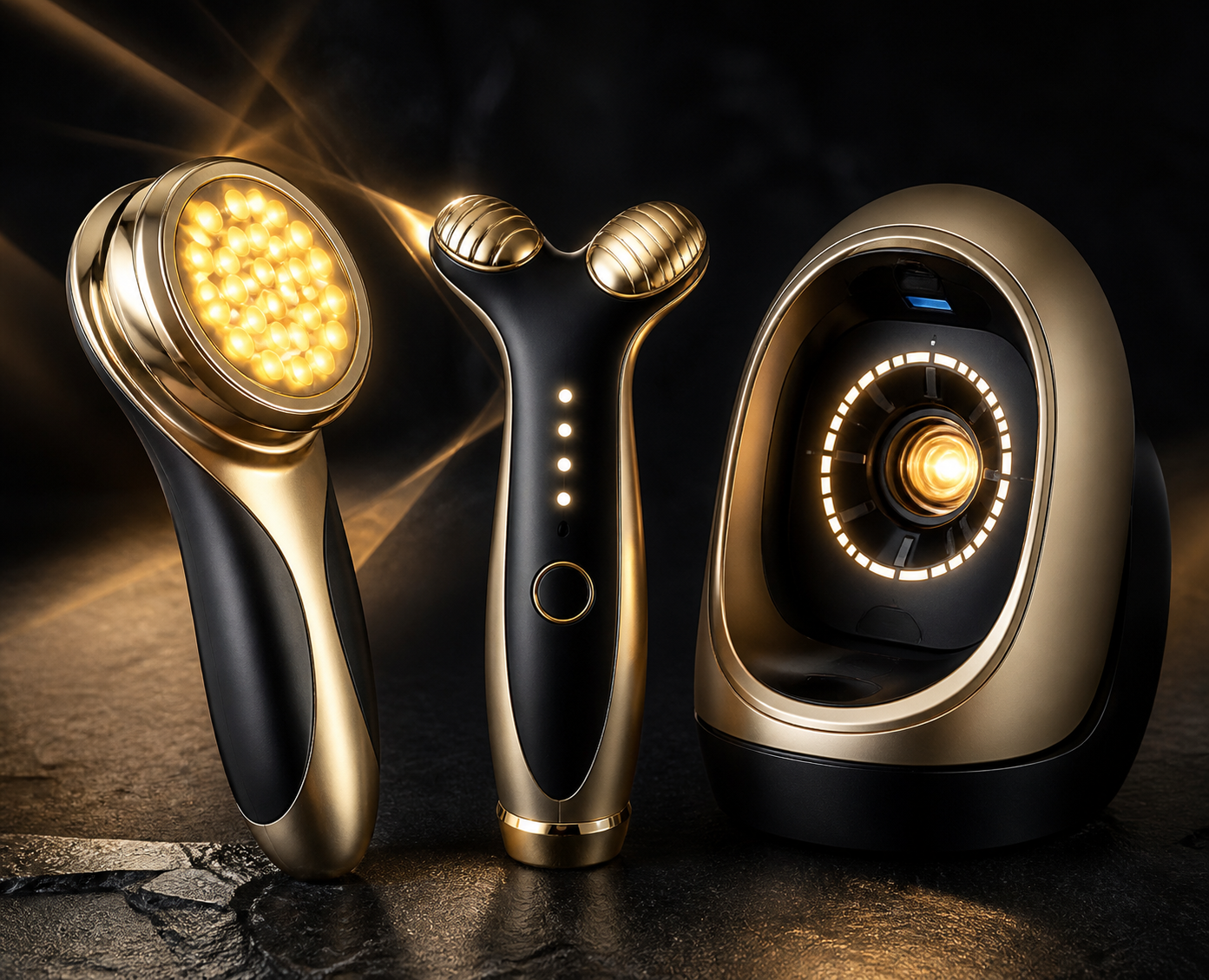
LED Light Therapy vs. Microcurrent: How At-Home BeautyTech Devices Actually Work
A practical breakdown of red/NIR LED wavelengths, microcurrent facial toning, and how consumers pair clinical devices with daily skincare.
Why At-Home BeautyTech Is Replacing Single-Step Routines
Consumers are no longer satisfied with topical creams alone. Across North America, Europe, and Korea, at-home LED masks, microcurrent wands, and ultrasonic skin scrubbers have moved from niche spa tools into everyday bathroom counters. Understanding the mechanism behind each modality helps shoppers choose devices that deliver measurable results rather than novelty.
Red & Near-Infrared LED Photobiomodulation
Clinical-grade LED devices typically combine 633nm red light with 830nm near-infrared wavelengths. Red light targets superficial dermal fibroblasts to support collagen synthesis and calm visible redness, while near-infrared penetrates deeper tissue to aid recovery. Consistency—three to five 10-minute sessions per week—matters far more than maximum wattage.
Microcurrent Toning & Conductive Gels
Microcurrent tools deliver low-level electrical currents (measured in microamperes) that mimic the body's bioelectric signals to temporarily lift facial contours and improve product absorption. Because dry skin resists current, a water-based conductive gel is essential—oil-based serums block conductivity and reduce effectiveness.
Building a Safe Combined Protocol
Use microcurrent on clean skin with conductive gel first, rinse or pat dry, then follow with LED therapy before applying peptides or barrier creams. Avoid combining strong exfoliating acids immediately before electrical treatments to prevent sensitivity.
Editorial, Curated Beauty & Private Domain Acquisition Inquiries